
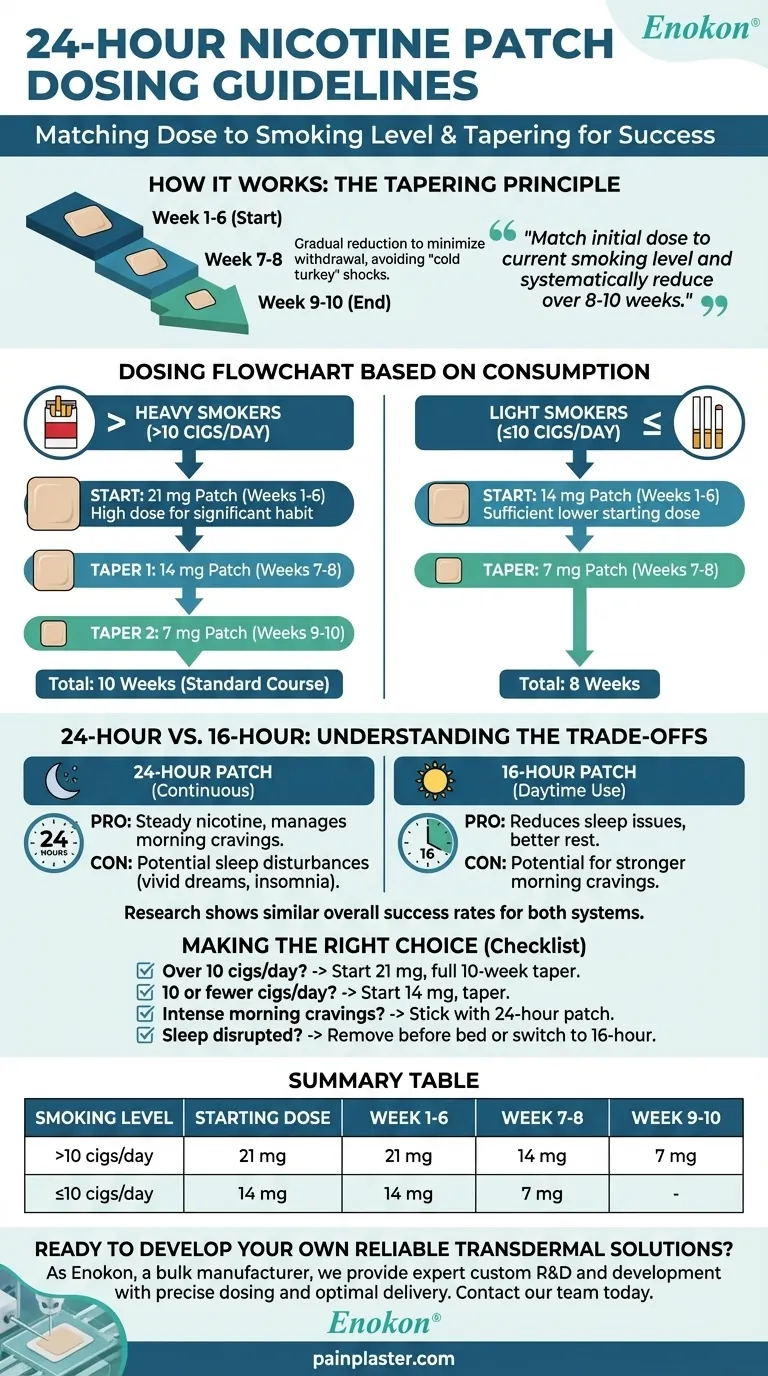
The recommended dosing guidelines for 24-hour nicotine patches follow a structured step-down approach based on the user's smoking habits. For those smoking over 10 cigarettes daily, the regimen starts with 21 mg/day for 6 weeks, followed by 14 mg/day for weeks 7-8, and 7 mg/day for weeks 9-10. Smokers of fewer than 10 cigarettes daily begin with 14 mg/day. Research indicates no additional benefit from extending patch use beyond 8 weeks. The 24-hour patch is ideal for individuals experiencing morning cravings, while the 16-hour patch may suit those with sleep disturbances. Gradual tapering is advised to eventually discontinue use.
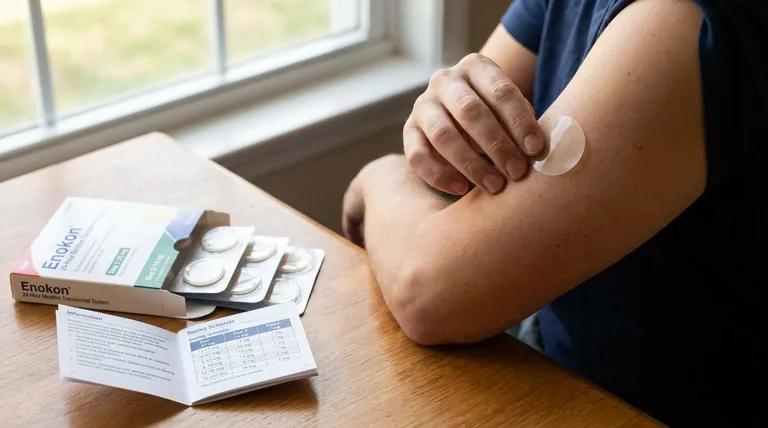
Key Points Explained:
-
Dosing Based on Cigarette Consumption
- Heavy smokers (>10 cigarettes/day): Start with 21 mg/day for 6 weeks, then reduce to 14 mg/day (weeks 7-8), and finally 7 mg/day (weeks 9-10).
- Light smokers (≤10 cigarettes/day): Begin directly with 14 mg/day.
- Rationale : Higher initial doses address stronger nicotine dependence, while gradual tapering minimizes withdrawal symptoms.
-
Treatment Duration
- Meta-analysis shows no significant benefit beyond 8 weeks, making extended use unnecessary.
- Typical programs last 8–12 weeks, with a goal of complete cessation by the end.
-
24-Hour vs. 16-Hour Patches
- 24-hour patches: Best for users with overnight/morning cravings due to continuous nicotine release.
- 16-hour patches: Preferred for those experiencing sleep disturbances, as they’re removed at bedtime.
- Both types have comparable success rates in smoking cessation.
-
Tapering and Discontinuation
- Gradual dose reduction (e.g., 21 mg → 14 mg → 7 mg) helps the body adjust to lower nicotine levels.
- Complete discontinuation after 10–12 weeks is recommended to avoid prolonged dependency.
-
Special Populations
- Adults/teens ≥18 years: Follow the step-down program as labeled or per physician guidance.
- Children: Not recommended due to lack of safety and efficacy data.
-
Clinical Evidence
- Studies support the 8-week efficacy window, emphasizing structured tapering over indefinite use.
- Patient-specific factors (e.g., craving patterns, side effects) may warrant adjustments under medical supervision.
These guidelines balance efficacy with safety, ensuring a systematic approach to quitting smoking while minimizing relapse risks. Always consult a healthcare provider for personalized adjustments.
Summary Table:
| Smoking Habit | Initial Dose (Weeks 1-6) | Tapering Phase (Weeks 7-8) | Final Phase (Weeks 9-10) |
|---|---|---|---|
| >10 cigarettes/day | 21 mg/day | 14 mg/day | 7 mg/day |
| ≤10 cigarettes/day | 14 mg/day | Optional step-down | Discontinue or 7 mg/day |
Key Considerations:
- Duration: 8–12 weeks total, with no added benefit beyond 8 weeks.
- Patch Type: 24-hour patches for morning cravings; 16-hour patches if sleep disturbances occur.
- Tapering: Gradual reduction minimizes withdrawal symptoms.
- Special Cases: Not recommended for children; consult a doctor for personalized adjustments.
Ready to quit smoking with a proven nicotine patch regimen?
At
Enokon
, we specialize in manufacturing high-quality transdermal nicotine patches designed for effective smoking cessation. Our patches are trusted by healthcare distributors and brands for their reliability and consistent dosing. Whether you need standard formulations or custom R&D solutions, our technical expertise ensures optimal results.
Contact us today to discuss bulk orders or tailored nicotine patch development for your patients or customers!
Guide Visuel
Produits associés
- Patch anti-douleur à l'armoise et à l'absinthe pour les douleurs cervicales
- Patch antidouleur en hydrogel de lidocaïne pour le soulagement de la douleur
- Patchs chauffants anti-douleur pour les crampes menstruelles
- Patch anti-douleur Icy Hot Menthol Medicine
- Patchs anti-douleur à chaleur infrarouge lointaine Patchs transdermiques
Les gens demandent aussi
- Pour quel type de douleur les patchs anti-douleur sont-ils le mieux adaptés ?Soulagement ciblé de la douleur persistante et localisée
- Les pilules et les patchs anti-douleur sont-ils disponibles sans ordonnance ?Les options en vente libre expliquées
- Comment les patchs antidouleur se comparent-ils aux analgésiques oraux ? Soulagement ciblé ou effets systémiques
- Qu'est-ce qu'un patch antidouleur ?Découvrez des solutions ciblées et non médicamenteuses pour le traitement de la douleur
- Quel est l'objectif des patchs antidouleur ?Un soulagement ciblé sans effets secondaires



















